

Chemical vs physical exfoliation: what’s the difference?
If you’ve already added vitamin C, retinol and hyaluronic acid to your routine and your skin still looks a little dull, exfoliation could be the answer to glowing skin. Why? Well, dead skin cells don’t always shed as efficiently as you get older, and when they stick around on the surface of your face, let’s just say, a lacklustre complexion is standard. Not only that, but texture becomes more of an issue – think rough patches and congestion - and your skincare products don’t sink in as well either.
How exfoliation supports different skin concerns
The effects of slower turnover aren’t the same for everyone. Some people develop dry patches that never go away, even with regular moisturiser, while others notice more clogged pores, especially in areas that already tend to feel oily. Skin can also look uneven in tone when dead cells don’t shed – and that all applies to the face and body, FYI.
“Exfoliation isn’t about scrubbing the skin into submission, it’s about encouraging the skin’s own renewal cycle so it functions as it’s meant to,” says Aesthetic Doctor Lauren Jamieson.
What are chemical exfoliants?
Chemical exfoliants work by loosening the bonds between dead skin cells so they fall away without you having to create friction on the skin. Alpha hydroxy acids (AHAs) like glycolic, lactic, mandelic and malic acids are watersoluble and act mainly at the surface.
“AHAs are particularly effective for revitalising tired-looking skin. They gently accelerate the shedding of surface cells, which can improve luminosity and make skin appear smoother without aggressive exfoliation,” shares Consultant Dermatologist Dr Sharon Belmo.
Beta hydroxy acids (BHAs) behave differently. Salicylic acid, is oilsoluble, meaning it can cut through sebum and travel through the pores, making it helpful for oilier skin types who experience congestion or breakouts.
The Clear Cell Salicylic Clarifying Pads offer the best of both worlds. They contain salicylic and glycolic acid to effectively remove impurities and excess oil on the surface as well as deep within your pores.
However, they’re not the only exfoliating acids found in skincare. Gluconolactone, galactose, and lactobionic acid, are polyhydroxy Acids (PHAs). Working on and around the skin’s surface, they are known to be incredibly gentle, making them perfect for sensitive skin types.
Finally, enzymes are also considered to be chemical exfoliants, and they are often derived from fruits like papaya or pineapple. They break down keratin proteins in dead skin cells on the skin's surface without harming living cells or disrupting the skin barrier, making them useful when a mild exfoliating option is preferred.
What are physical exfoliants?
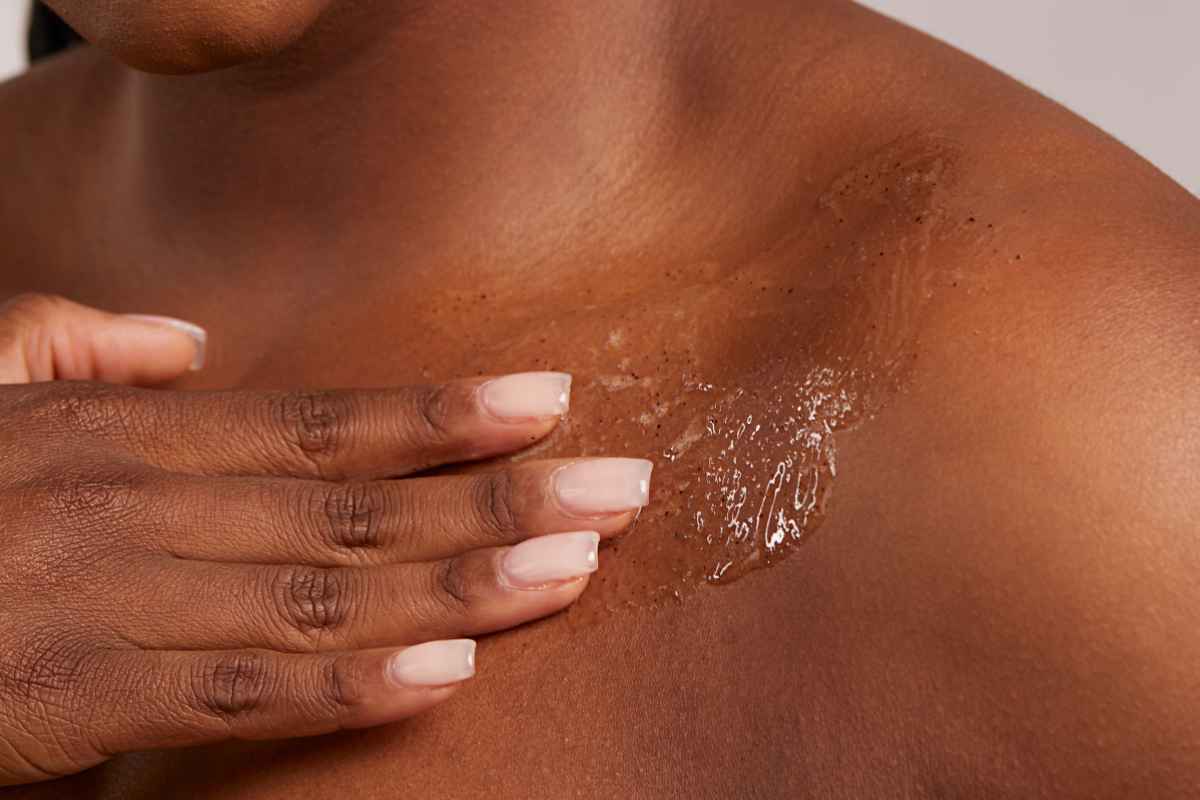
Physical exfoliation, on the other hand, uses friction to lift away dead cells. Scrubs with fine particles, cleansing cloths, mitts, brushes and loofahs all fall into this category. The action itself dislodges the cells already sitting loosely at the surface.
“Physical exfoliation can be very effective when used correctly. The key is choosing tools or formulas that are gentle enough not to disrupt the skin barrier, as overly harsh scrubs can create irritation rather than improving the skin,” shares Advanced Aesthetician Corina Mihalache.
For the face, finely milled particles like rose quartz microcrystals and bamboo powder that can be found in the Ageless Total Microderm Exfoliator, or muslin cloths, are usually best. While the body can tolerate more robust ingredients like sugar and salt, which is why physical exfoliation often features in pretan routines or before body treatments.
Chemical vs physical exfoliation: how to decide
Since both methods help you wave goodbye to dead skin cells, the main way to decide what’s best for you is to focus on your skin type and concerns. Chemical exfoliants work well when your concern sit below the surface, think congestion, mild pigmentation, early texture changes. Physical exfoliation, on the other hand, is often more practical for the body, or when your issue is mainly surface roughness.
In fact, a combination of both, without going overboard, can be the best strategy to follow. Chemical exfoliants help loosen cells, while physical ones can be used on occasion to clear what’s already loosened up.
How often should you exfoliate?
The answer depends on your skin type. It’s not just how often, but what you use that makes up the perfect formula. But generally, oily or resilient skin may do well with more frequent exfoliation anywhere from daily to three to four times a week. However, in general most people settle comfortably at twice a week, with sensitive skin types benefiting from gentler formulas. “Consistency is far more important than intensity. Regular, moderate exfoliation supports healthy skin renewal without compromising the barrier,” adds Belmo.
When it comes to the body, the skin generally tolerates exfoliation slightly more often, particularly in colder months when dryness increases.
Finding the right balance
Ultimately, you don’t have to choose between the two, and while chemical and physical exfoliants differ in intensity, they both have a place in the ideal skincare routine. When done right, exfoliation, whether chemical or physical, remains an effective way to keep skin looking clear, smooth and healthy.